
Your Custom Text Here

Coffee Anyone?
I’m obsessed with coffee and maybe you are too. My journey to the perfect coffee at home.
I’m Obsessed with coffee
and maybe you are too
I remember when I first started drinking coffee in High School. It seemed like it was a necessary part of becoming an adult back then.
My friends and I would sit in an all-night restaurant (Denny’s) and drink our coffee with lots of cream and sugar; despite all the additional stuff to make it palatable, I felt so mature.

Call me a snob, but I just can’t imagine drinking that stuff now.
Fast forward to my college days — coffee shops existed but nobody other than people in Seattle had ever heard of Starbucks. I spent countless hours in Cafe Sienna in Chico, California. That’s where I would do my homework or read and of course, enjoy a cafe latte a few times a week. Like I said, coffee shops existed, but they really weren’t a thing back then. At least, not like they are now.
That was a long time ago.
I’ve never been much of a drinker and I’ve never been into drugs. Coffee was and IS my vice.
In more recent years, I searched for the perfect cup of coffee for home. My husband and I settled on a French Press coffee maker and took the time every day that it required to make it. We’d purchase freshly roasted beans and special coffee blends from our favorite local coffee shop and, of course, we’d have it ground especially for the French Press.
Or sometimes we would use a Moka pot for an espresso. And we would even foam up milk too - to make lattes or cappuccinos.
We really enjoyed our daily coffee ritual.
And then we spent a month in Italy
Last year, we spent a month in Italy. We’d enjoy a Cappuccino every morning, often with a cornnetto, an espresso in the afternoon and sometimes we even indulged in a cup after dinner late at night.


We were spoiled!
When we got home, to the U.S., we just couldn’t forget the “real” cappuccinos and espressos we had. We didn’t enjoy our coffee anymore. We thought that maybe it was the beans, so we tried varying what we bought. We tried different grinds. We tried different brewing methods. Nothing was working.
What could we do to get back that loving feeling?
Father’s Day Approached
As Father’s Day approached, I had an idea that I started to research. I wanted to see if I could find a machine that would make the coffees we love so much.
Top 5 Reasons for Purchasing an Espresso Machine
Make really good coffee
Be compact enough to easily fit our small kitchen.
No pods that would go to the landfill
An option to foam milk
Fit our budget
Problem Solved!

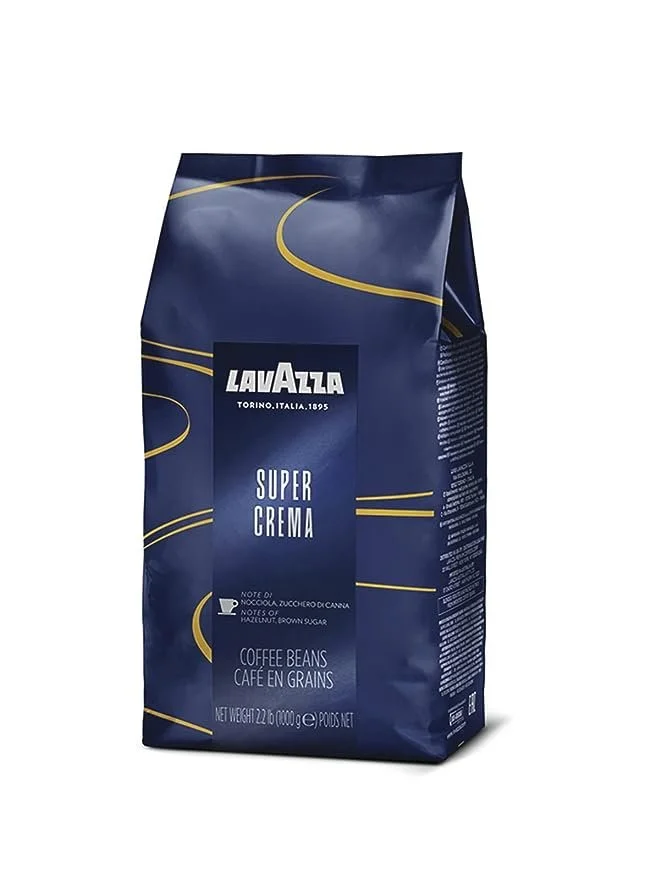
We’re in love with our coffee ritual again. I found a De’longhi espresso machine and ordered Lavazza whole coffee beans from Italy. Yes!!!
Now, we look forward to coming home for lunch every day so we can enjoy a home-made espresso, latte or cappuccino. Actually, my new favorite … a double Ristretto.
It doesn’t get any easier than this
Just push a button. It grinds the beans, foams the milk, cleans itself. It’s a perfect cup of coffee every time. No more making coffee that nobody drinks. No waste for the landfill.
We’re back to enjoying our daily ritual.
And since we got the machine, I’ve only been to a coffee shop once - and that was to meet a friend.
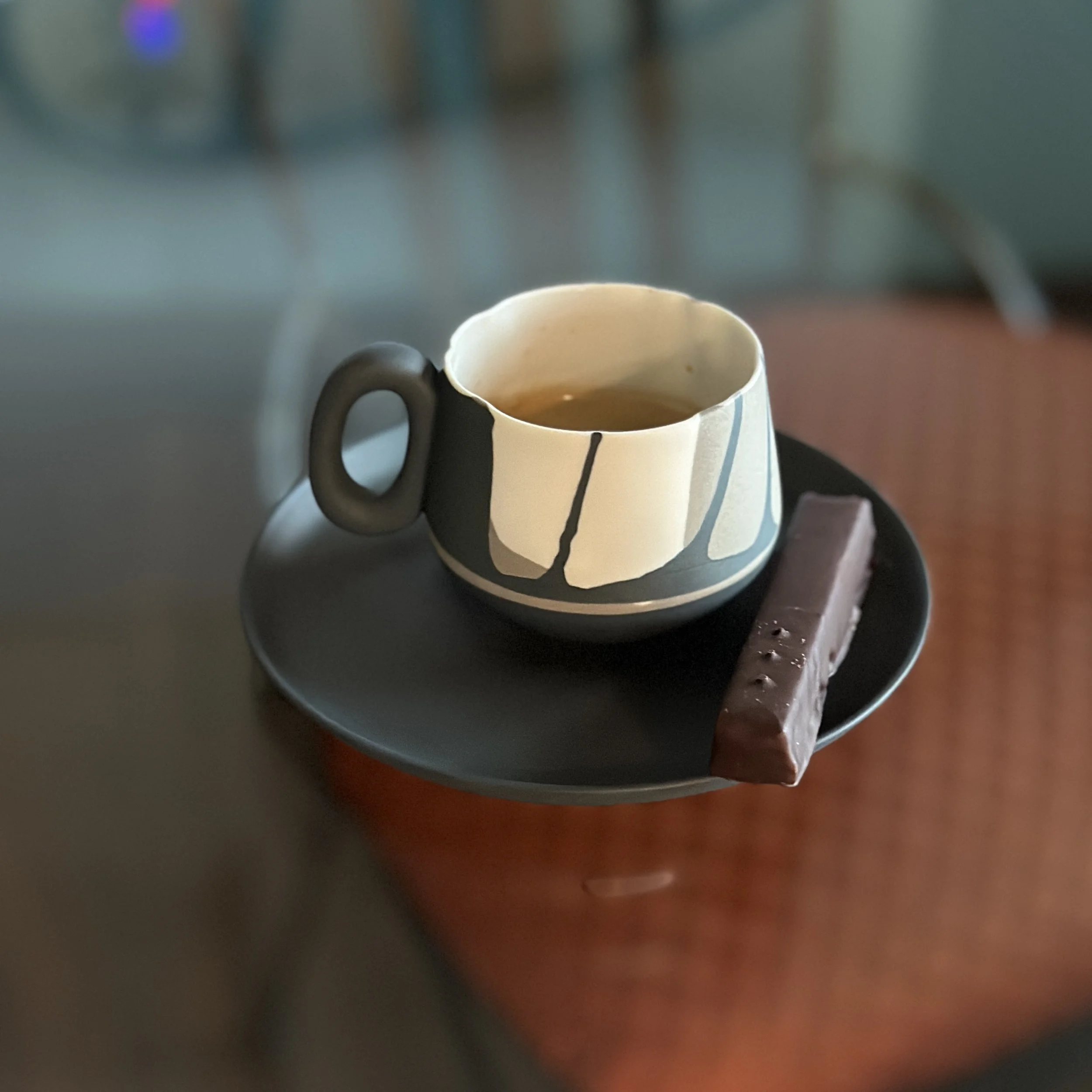
Espresso ~ made at home

How to Work with a Graphic Designer
Have you ever wanted to hire a designer to create a logo or a label but you're not sure where to start? You know you need someone who can create a design for you because you can't do it yourself. But, you wonder, do I need to have an idea in mind first? Should I find samples of designs that I like? Do I need to have a Pinterest page to show someone what to make?
Working with a Graphic Designer
Have you ever wanted to hire a designer to create a logo or a label but you're not sure where to start?
You know you need someone who can create a design for you because you can't do it yourself. But, you wonder, do I need to have an idea in mind first? Should I find samples of designs that I like? Do I need to have a Pinterest page to show someone what to make?
Read below for a few tips on how to work with your designer.

Free Wine Label Creative Brief Template
Q: Do I need to bring a sketch of my idea?
A: No, you don't. In fact, to get the most value from working with a designer, it's best to give them the space to do what they're good at - creative problem solving. You don't need to bring samples of what you like and you don't need to have a pencil sketch or even a Pinterest board.
TIP: What to bring to your designer
What you need to bring to a designer is a goal. What are you trying to achieve? It’s also ok, and it can be helpful, to let us know what inspires you.
What are you trying to achieve?
Designers are problem solvers who have more than just the ability to use an Adobe program. A designer will look at overall objectives, consider the surroundings and find inspiration from things or places you haven't even thought of.
They understand visual language, and know how to combine fonts, colors, shapes, and styles to convey feelings or meanings. A designer knows how to move beyond the obvious visual elements to translate a certain thought, an era or a style and how to elicit a desired sentiment.
Present your designer with a problem, give her space to create, and she'll give you a creative solution.
How do I communicate my project?
To gain clarity and alignment with your design team, start with a Creative Brief.
The Creative Brief will serve as a guide which will allow creativity to flourish without putting a lid on the creative process.
What to put in the Creative Brief:
Describe the essence of your company
Convey who your ideal customer is
Give details about the project
Who are your competitors?
List existing brand assets
Explain limitations: low budget, bottling line limitations, etc
Timing expectations
Amy Linn is the Creative Director and Owner of Linn Design Studio where we capture dreams and package them into brands that people love.
Ready to level up your brand? Or shall we start from the beginning?
Contact us to get started.

Amy Linn | Owner & Creative Director at Linn Design Studio

Pantone Colors Explained
Usually your designer will select Pantone colors for your packaging or for your brand identity. What are Pantone colors and why do we use them? Should you own your own guide book? How do we use them for our websites?

Pantone formula guide
When you hire a designer to create your Brand Identity, she’ll usually specify a combination of Pantone colors.
What are Pantone® Colors and Why Do We Use Them?
The Pantone Matching System was created in 1963 as a way to standardize colors across industries. Its unique numbering system and formula allows a designer to specify a particular shade of red in her studio in California and a printer in New York will know exactly the shade of red he is supposed to print. Everyone in the design, manufacturing and print industries uses the same system.
Do You Know Your Company’s Pantone Colors?
Make sure your designer gives you your brand’s Pantone colors. As your company or brand grows, you will be able to stay consistent. So, when you decide to embroider hats or aprons or install new signage, your vendors will easily be able to match your existing branded materials.
Often times, this information will be part of your Brand Style Guide.
Your Brand Colors for Print or Web.
Knowing your Pantone colors is a good start. However, in addition, it’s helpful to know the CMYK, RGB, and the Hexcode combinations that correspond to each of your Pantone colors. See the guide on the right for a breakdown of these different color types.
CMYK - there are times when you won’t print a Pantone color (spot color) but will be printing CMYK and still want it to look like a Pantone Color. In this case, refer to the Pantone Color Bridge where you’ll find the CMYK combination that is as close as possible to your Pantone color of choice.
Also within the Color Bridge are the RGB and HTML combos - so you can use these numbers to specify your Pantone colors on the web.
How Many Pantone Colors are There?
The current Pantone Formula Guide includes 2,161 solid Pantone colors! The guide is printed in two ways - on coated paper stock and on uncoated paper stock. The color will look different on different papers, so it’s helpful to see them on the proper paper type.
Pantone also has a selection of Metallic, Pastels and Neon colors.
Should You Own a Pantone Formula Guide?
While it’s not critical, as a company owner, to have your own Pantone Formula Guide, it’s helpful to own if you want to communicate with vendors or your designer. Below are some suggested books.
The Formula Guide is a list of Pantone Colors and the Color Bridge shows the conversion of the Pantone colors to CMYK or web.


Formula Guide
Solid (For coated or uncoated paper stocks)


Color Bridge
For coated & uncoated papers
CMYK, RGB, HTML
Note: As an Amazon Associate I earn from qualifying purchases. If you do purchase the books, I suggest you buy both a coated AND an uncoated version.
Color Tips
01 : Pantone color - use this as your official brand color(s) and as the guide for all branded items.
02 : Specify the color as Pantone or PMS. For example: Pantone 684U is the same as PMS 684U.
03 : CMYK - Used for digital printing. Look up the values in the Color Bridge book.
04 : RGB - Used for computer screens.
05 : HEX - For websites.
06: Spot Color: A Spot Color is usually a Pantone® color.
07: CMYK - C = Cyan, M = Magenta, Y = Yellow and K = Black.
Next post … Pantone - How to use the Color Bridge Guide
Sign up for our newsletter to receive the latest.
Is there something you would like to learn more about? Let us know.

Does Packaging Sell?
Does your packaging design matter? We had lots of drink options in the store to choose from, but it’s the clever packaging and the experience that it creates that sold us.
Absolutely it does - and here’s a good example.
This is a carbonated Japanese beverage named Ramune. We had lots of options in the store to choose from, but it’s the clever packaging and the experience that it creates that sold us.
There’s a glass marble in the top, used as a seal, that the consumer pushes through the neck causing a splash, The marble then rattles around as you drink - without a worry that it will come back out.
According to Wikipedia, the drink was introduced to Japan in 1884 and the bottle design is attributed to Hiram Codd and is called a Codd-neck bottle.
Have you experienced a Ramune? Is there another example of packaging where the experience is fun and made you want to buy it?
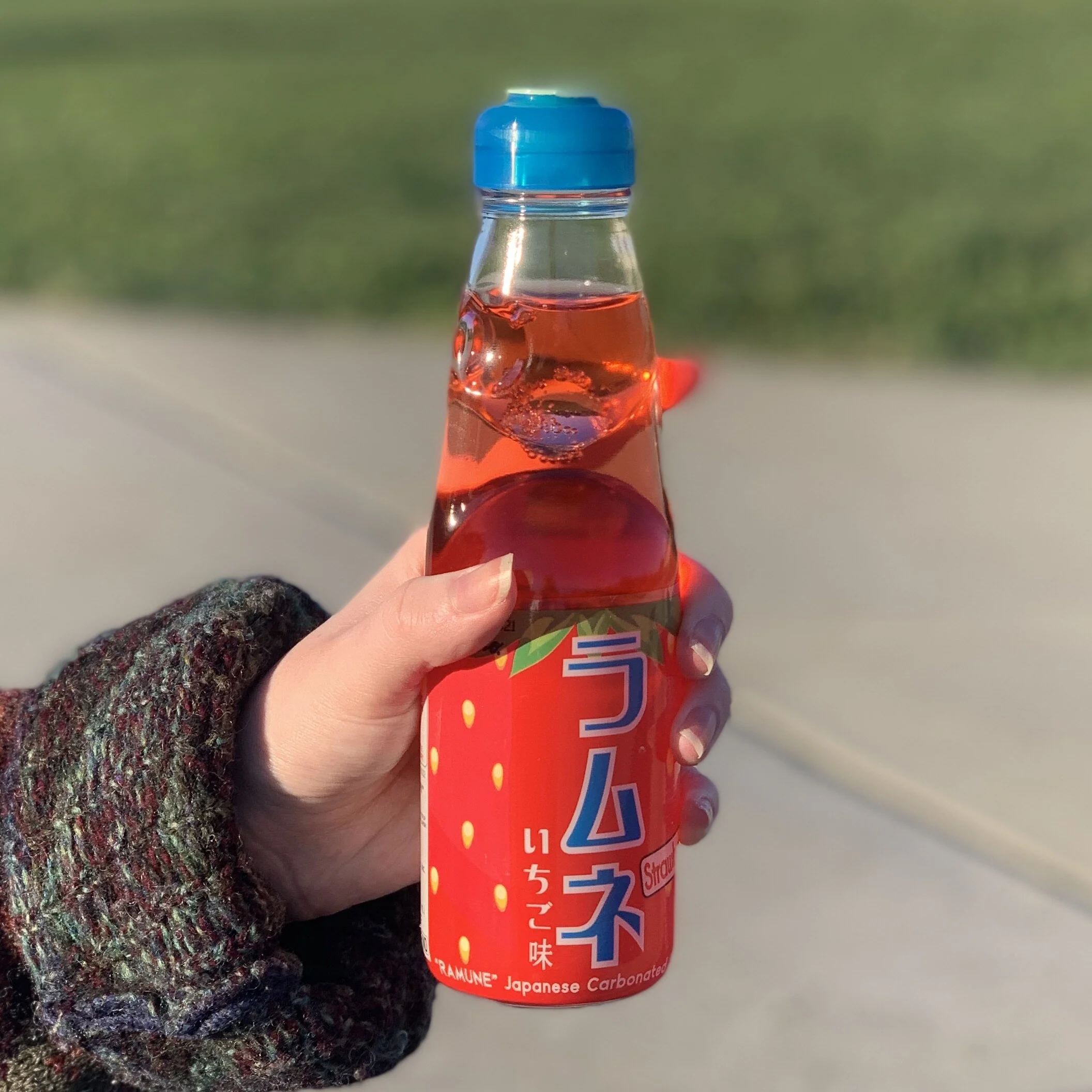
Packaging Design: Ramune
Amy Linn is the Creative Director and Owner of Linn Design Studio – Graphic Design and Brand Strategy Agency with a taste for the wine industry.
Do you want to level up your packaging?

The Heart of Your Company
When is it time to rethink your mission statement? Have your values - and your company's values changed since the beginning of the pandemic? Maybe now is a good time to dig down deep and figure out what you truly stand for.
Defining the heart of your company during the pandemic ……
If your business doors are closed due to the pandemic, you may have some time on your hands. You’re home, your team is home, and your customers are home. Everyone is wondering when things will go back to normal. Or wondering …. What will the new NORMAL be?
We’ve all been shaken up and, at the time of this writing, non-essential businesses are still closed. We have hopes of opening the rest of our businesses soon, but there are so many unknowns about the summer, the coming fall, and beyond. If you still have a business, or a job, you’re probably looking at yourself as being one of the lucky ones - I know I am.
When you started your business, you may have developed your value statement; it may have been something that you really put a lot of thought into when you first wrote it down. Sometimes when unexpected things happen, they cause enough of a jolt to cause us to take a fresh look at things we’ve looked at many times before. Perhaps it would be worthwhile to take this quiet time to take a fresh look at your company and what it stands for. Personal reflection is a worthwhile endeavor too.
It’s a good time to define or redefine the heart of your company.
What values are at the heart of your company? What do you stand for? How is your company perceived by your customer or potential customer? Your brand IS the perception customers have of you. So, what core principles are shining through? What’s your company culture? Do you like what you see? Like what others see? Does it reflect your true core values?
Right now, with so much uncertainty in the world, and within each of our communities, those companies with values we align with are the ones we will look to support when we’re able. It might have been important before, but I think that during a crisis, the importance of values becomes so much more important in guiding our future decisions.

Have you noticed the companies whose core values are shining through? What do their actions tell you about the souls of their companies? Will they gain or possibly lose customers? Which ones resonate with you?
Here are some examples I’ve noticed – for better or for worse:
1. Restaurants using their uneaten foods to feed people in need, for free
2. A winery that drops off a free case of wine to their restaurant patrons so that they can make a profit from the sale
3. The clothing store using vintage fabrics to make masks

4. Museums hosting free virtual tours
5. The struggling non-profit that is asking for donations for their patrons rather than donations to their organization
6. Individuals who shop for their elderly neighbor
7. Restaurants delivering meals to hospital staff as a way to say thank you
8. Individuals who reach out with a phone call to connect with a scared, sheltering-in-place older person who they don’t know
9. A “non-essential” business opens up prior to the government go-ahead
10. Brewers and distilleries that change operations quickly in order to make needed hand sanitizer
11. Dressmakers who change gears and make masks instead of gowns
12. The company who has coffee delivered to all their employees who are working from home
13. The property owner who tells the restaurant to pay employees rather than their rent during the shutdown
14. Companies who continue to pay benefits for recently laid-off employees
The ways these businesses and individuals are responding to the pandemic sets a tone that reflects who they are. No, we haven’t seen their value statements, but what’s in their hearts shows. What’s in your heart shows in your brand too. Does it need some realignment?
If you’re ready to work on your value statement, think of what truly matters to you. Let your heart be your guide. Are you a helper? Generous? Do you jump in where you see a gap that needs to be filled? Are you innovative? A problem solver? Are you a global thinker? Or are you more micro-community driven?
Write down what matters to you to help bring clarity. Be transparent about what is important to you and to your company as this is become your guide for not only your actions, buy your team’s actions as well. With a strong set of values, you develop a company culture where you will attract customers who value what you value and employees who value what you value. When your values are clear, it helps align everyone to a common goal.
“In a nutshell, culture is the “heartbeat” of a company. It’s something that lights up the entire system. If a company has great culture, it can be the backbone of their success.” – Claude Silver, Chief Heart Officer at VaynerMedia
How will you come out on the other side of this? Taking this time to define or redefine the heart of your company will help others know your values and help you align to where you want your brand to be. Your actions now can be perceived as positive …. And they can also be perceived as negative – it’s up to you. Be who you want to be; what you stand for shows.
Show your heart.
Amy Linn is the Creative Director and Owner of Linn Design Studio – Graphic Design and Brand Strategy Agency with a taste for the wine industry.
Ready for a brand audit? Contact us to get started.